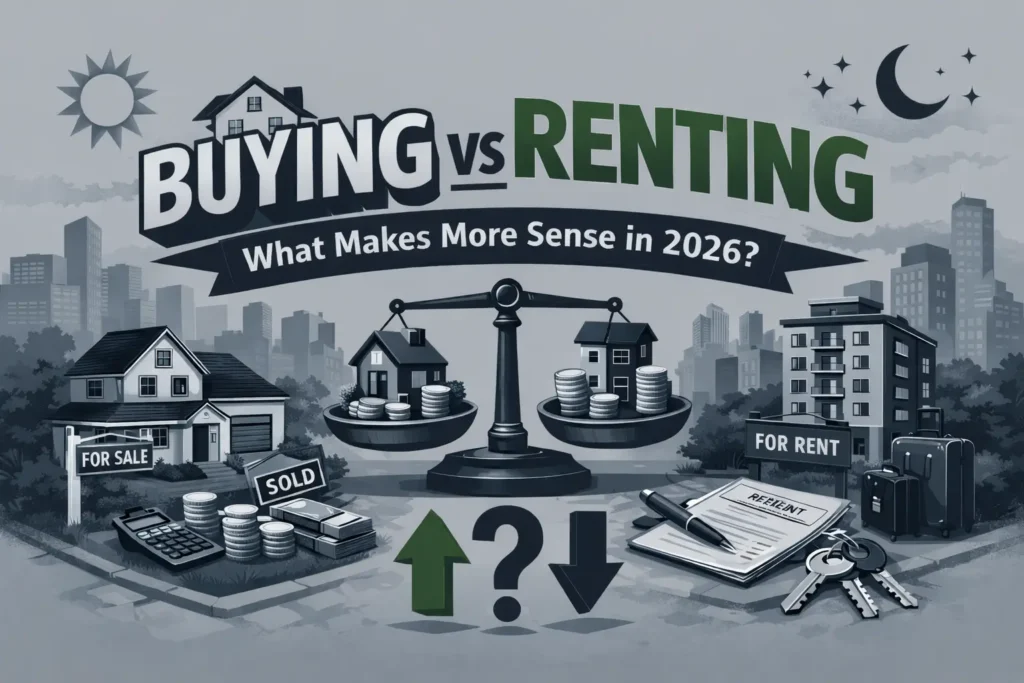
At some point, this question starts sitting in the back of your mind.
You pay rent.
You look at property prices.
You hear relatives say, “Why don’t you just buy a house?”
And suddenly you’re stuck wondering: Should I buy or rent a home in 2026?
The conversation around buying vs renting in India isn’t just financial. It’s emotional. It’s practical. And honestly, it can feel overwhelming.
So let’s slow it down and talk about it like real people.
What’s Going On in the Real Estate Market 2026 In India
The real estate market 2026 India is neither volatile nor competitive. Demand of houses in the cities like Noida, Pune, Bangalore and Mumbai is on the increase. Due to the new roads, metro lines and business areas, many areas in the city are being expanded.
At the same time, rental markets are active. Professionals are moving cities. Hybrid work is still a thing. People want flexibility.
So this isn’t a “good vs bad” situation. It’s about timing and personal comfort.
Cost of Buying vs Renting a House : Let’s Break It Down
Money is usually the first trigger behind this debate.
When you buy a home, the cost doesn’t stop at the price tag. There’s:
- Down payment
- Stamp duty and registration
- Brokerage
- Interiors
- Maintenance
It’s a serious commitment.
Renting feels lighter. You pay a deposit, move in, and you’re done. No long-term liability.
Now comes the big comparison – home loan vs rent EMI comparison.
In many cities, EMIs are noticeably higher than rent for similar homes. That difference can feel uncomfortable. Especially if it takes up a large chunk of your salary.
But here’s the key difference:
Rent disappears every month.
EMI builds ownership.
That’s the heart of the cost of buying vs renting an house discussion.
Long-Term Renting vs Buying: Where Do You See Yourself?
Now let’s talk about long-term renting vs buying.
If you plan to move cities in the next 3 – 5 years, renting makes complete sense. Why tie yourself down?
But if you see yourself staying in one place for the next decade, buying starts to look more logical.
Stability changes everything.
For example, many buyers in NCR first explore rental areas and research the best sectors to live in Noida before making a purchase decision. That kind of clarity reduces risk.
Because buying isn’t just financial. It’s emotional too.
Property Investment vs Rent Expense: The Wealth Angle
Here’s where it gets interesting.
When comparing property investment vs rent expense, think about opportunity cost.
If you buy:
- Your money is locked into real estate
- You benefit from appreciation
- You build a tangible asset
If you rent:
- You keep liquidity
- You can invest elsewhere
- You reduce long-term debt pressure
If your investments outperform real estate, renting could grow your wealth faster. But if property values rise steadily in your area, buying may turn out to be a strong long-term move.
There’s no universal formula. Only alignment with your financial goals.
Should I Buy or Rent a Home in 2026?
Let’s simplify it.
Buy if:
- Your EMI feels manageable, not stressful
- You have savings for emergencies
- You’re confident about staying in the same city
- You genuinely want the responsibility
Rent if:
- Your career path is still evolving
- You value liquidity
- Property prices feel stretched
- You want breathing room
The smartest buying vs renting comparison India is the one that aligns with your life – not someone else’s checklist.
Final Thoughts
In 2026, it will not be a choice of which one is better, to buy or rent. It is all about what makes sense in your life.
Purchasing is stable and long term. Leasing provides room and freedom.
Take a step back and consider your income, career and what risk level you can assume. You will know the answer when you answer these questions in an honest manner.
Because at the end of the day, a home should support your life – not stress it.
FAQs
1. Is paying rent just wasting money?
Not really.
Rent pays for flexibility, lower responsibility, and less financial pressure. You’re not stuck with maintenance, property taxes, or long-term loans.
It only feels like a waste if you’re not using the money you save wisely. If you invest the difference smartly, renting can actually support wealth building.
2. How long should I stay in a house to make buying worth it?
In most cases, buying starts making financial sense if you plan to stay at least 7–10 years.
That gives you time to recover registration costs, loan interest, and benefit from potential property appreciation.
If you’re unsure about staying long term, renting usually keeps things simpler.
3. What’s the biggest mistake people make in the buy vs rent decision?
Letting social pressure decide for them.
Buying a house because “everyone else is doing it” or because relatives suggest it can lead to financial stress.
The smarter move is to look at your income, savings, job stability, and future plans — and then decide calmly.